

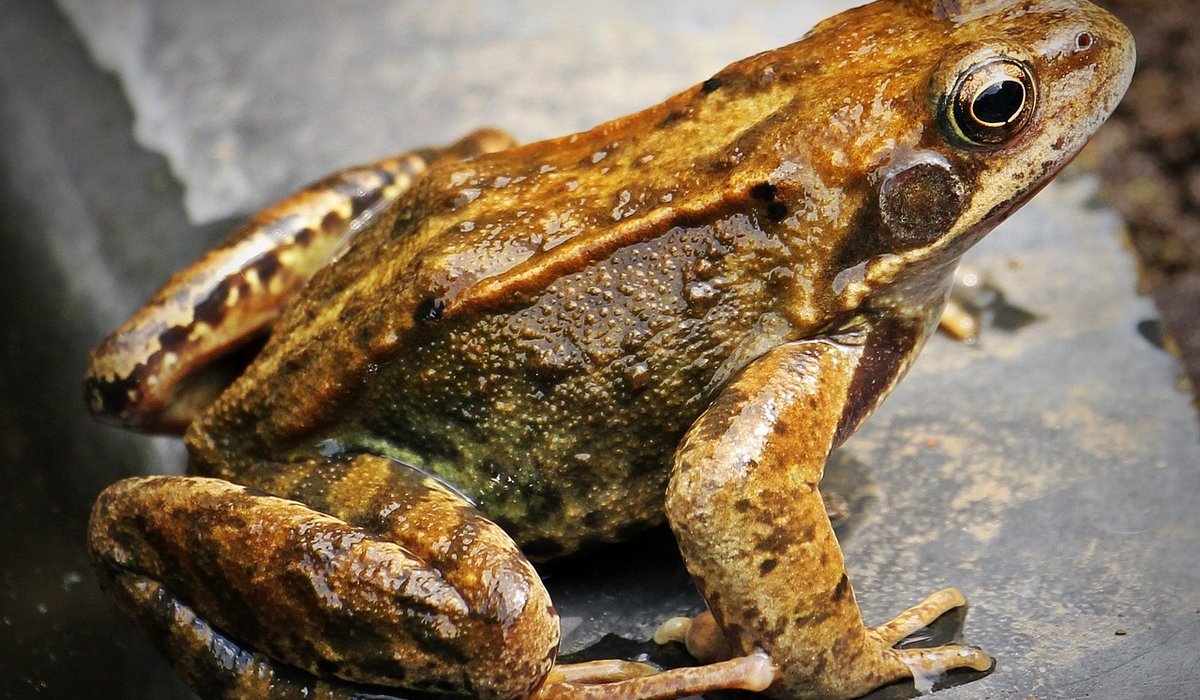
The common frog and the common toad are among the most familiar wild creatures in Britain, and both have had a difficult few decades. Thousands of field and farm ponds disappeared through drainage and changes in farming during the twentieth century, and many of those that remain are isolated, shaded, polluted or stocked with fish. In much of lowland Britain, garden ponds now make up a substantial share of the still fresh water available to wildlife. Your small patch of water matters far more than it looks. Build it with the right features, in the right spot, and frogs and toads will usually find it within a season or two.
A wildlife pond does not need to be large. Something around two metres by three is plenty, provided it is designed with amphibians in mind.
Rainwater is ideal for filling a new pond. If you must use tap water, let it stand for a few days first so the chlorine disperses.
Most amphibians that die in gardens drown not in the pond but because they cannot get out of it. Steep, smooth butyl or concrete sides are a death trap for frogs, toads, hedgehogs and beetles alike.
Frogs and toads spend most of their lives on land, not in water, and this is the part of pond gardening most people overlook. A tidy, close-mown border offers nothing in the way of shelter, food or somewhere to sit out the winter.
Common frogs are flexible and will use almost any pond with decent cover nearby. Common toads are fussier. They tend to favour larger, deeper, more established ponds, and they often return to the pond where they were born, sometimes travelling a kilometre or more to reach it. That journey is dangerous, so anything you can do to create damp, shaded, connected habitat between ponds helps enormously. Toads walk rather than hop, so they need cover to move through, not open ground.
Smooth and palmate newts also appreciate a garden pond, and they do best where there is plenty of submerged and floating plant cover, shallow margins for egg-laying, and no fish. Leave the pond to mature and it will steadily accumulate all three.
Frog spawn usually appears in clumps from February onwards, while toad spawn follows a little later in long strings wound around plant stems. Tadpoles take roughly twelve to sixteen weeks to metamorphose, which means the pond should not be disturbed through spring and early summer.
Be patient. A new pond often sits quiet for a season before anything finds it, then one mild night in spring you will hear the low croaking that tells you the frogs have arrived. That first chorus is worth every bit of the digging.

Reeddell Simple, genuine and looked after with care — the kind of place worth returning to.

Reeddell Real stories, useful guides and the occasional recommendation, all in one calm corner of the web.

Keep your pond water healthy using natural methods such as barley straw, beneficial bacteria and careful planting instead of chemical treatments.

Comments
ALina Kelian
19th May 2018 ReplyReeddell An honest, everyday look at the things that make life a little better — with advice you can actually use. ullamco laboris nisi ut aliquip ex ea commodo consequat.
Rlex Kelian
19th May 2018 ReplyReeddell Written for people who value the details, and want honest guidance they can trust. ullamco laboris nisi ut aliquip commodo.
Roboto Alex
21th May 2018 ReplyReeddell Real stories, useful guides and the occasional recommendation, all in one calm corner of the web. ullamco laboris nisi ut aliquip ex ea commodo consequat.