

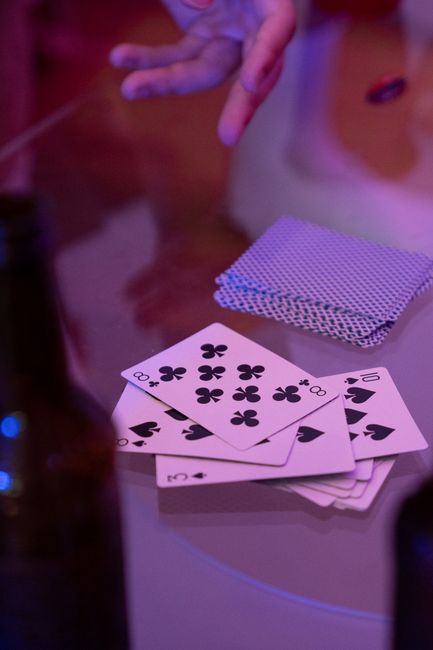
Ask ten gamblers why they play, and you'll get ten different answers. The thrill of a last-second parlay. The satisfying thunk of the reels lining up. The quiet intensity of a poker table where every twitch tells a story. What unites them isn't luck — it's math. The house edge exists for a reason, but understanding it is the difference between a player who lasts and one who donates their bankroll in a weekend. This isn't a lecture on quitting. It's a field guide to playing smarter across slots, betting, and poker, built for people who actually enjoy the games.
Every game in a casino or sportsbook is designed to pay out less than it takes in over the long run. That gap is the house edge, and it varies wildly depending on what you sit down to play. Blackjack with basic strategy sits around 0.5% — a game where skill genuinely narrows the gap. Slot machines? Anywhere from 2% to 15%, depending on the title and the jurisdiction. American roulette, thanks to that double zero, weighs in at 5.26%. European roulette cuts it nearly in half at 2.7%.
Why does this matter? Because a lower house edge doesn't just mean better odds — it means more time on your money. A €100 session at a 3% edge game and a €100 session at a 10% edge game can feel identical for the first hour. By hour three, the difference is obvious.
New slot players chase the highest RTP like it's gospel. Experienced ones know volatility matters just as much. A high-volatility slot like Money Train 4 might have a 96.5% RTP, but it can eat 200 spins before anything meaningful lands. A low-volatility game like Starburst pays often but softly, keeping your balance steady rather than spiking it.
Here's the practical takeaway: match volatility to your session length. Two hours with €50? Play low or medium volatility. A short session with a shot at something huge? High volatility is fine, but accept you might lose every euro.
Betting on sports isn't about picking winners. It's about finding value — spots where the bookmaker's implied probability is wrong. A -200 favorite (implied 66.7%) that you genuinely believe wins 75% of the time is a value bet, even though it feels unglamorous. A +400 underdog you love for emotional reasons is probably a donation.
Sharp bettors talk about closing line value (CLV). If you consistently get odds better than the closing line, you're beating the market over time. It's the single most reliable metric for long-term profitability. Track it. A €10 bet at 2.05 that closes at 1.95 beats a €100 bet placed blind. For more on this, see สล็อต.
Bankroll management here is brutally simple: bet 1-3% of your bankroll per play. A €1,000 bankroll means €10-30 units. That survives 30-50 losing bets in a row, which absolutely happens.
Poker is unique because you're not playing against the casino — you're playing against other people, with the house taking a slice. That means a skilled player genuinely has an edge. But 90% of players lose, and it's not because of bad luck. It's because they call too much, bluff too obviously, and tilt after a bad beat.
Three principles separate winners from the rest:
Beginners should play tight-aggressive and forget the fancy stuff. There's no prize for being the fanciest bluffer at a €1/€2 table — only for having the most chips when the session ends.
Welcome bonuses are marketing tools, not free money. A 100% up to €200 bonus with 35x wagering on slots means you must bet €7,000 before withdrawal. That's not impossible, but it's designed to keep your money in play longer than you'd naturally keep it there. Always check wagering contribution rates: slots often count 100%, but table games might count 10% or even 0%.
Responsible gambling tools — deposit limits, session timers, reality checks — are mandatory for licensed operators across Europe and increasingly beyond. Use them. A €200 monthly deposit limit is not an admission of weakness; it's a seatbelt.
The best iGaming players share one trait: they treat gambling as entertainment with a cost, not an investment. They set losses they can afford, walk away when the plan says so, and take genuine pleasure in a well-played poker hand even if it doesn't win. The math says the house wins long-term. Your job is to make the short term fun, controlled, and occasionally profitable. Do that, and you'll outlast 90% of the players sitting next to you.

Reeddell Simple, genuine and looked after with care — the kind of place worth returning to.

Reeddell Real stories, useful guides and the occasional recommendation, all in one calm corner of the web.

Discover British marginal plants that thrive in shallow water and provide cover for wildlife along the edges of your garden pond.

Comments
ALina Kelian
19th May 2018 ReplyReeddell An honest, everyday look at the things that make life a little better — with advice you can actually use. ullamco laboris nisi ut aliquip ex ea commodo consequat.
Rlex Kelian
19th May 2018 ReplyReeddell Written for people who value the details, and want honest guidance they can trust. ullamco laboris nisi ut aliquip commodo.
Roboto Alex
21th May 2018 ReplyReeddell Real stories, useful guides and the occasional recommendation, all in one calm corner of the web. ullamco laboris nisi ut aliquip ex ea commodo consequat.